
I once loved corduroy.
Corduroy was more than fabric. It was an early form of communication. You could draw pictures on it or write a note to the friend sitting beside you simply by running a finger across the floating yarn and pushing the fibers in one direction.
Best of all, nothing you wrote was permanent. One brush of the hand reset the fibers and erased the evidence. One Sunday morning when I was a kid, a friend sitting beside me on the back row at church wrote a curse word across the thigh of his pants.
That was the moment I realized civilization, as I knew it, was unraveling.
Lately, it seems like the perfect metaphor for the artificial and easily altered world we inhabit. Corduroy is delible—capable of being erased. It is the opposite of indelible, the things meant to last.
Sometimes it seems that nearly everything around us can be brushed away and rewritten. Facts change according to who is speaking. Promises are adjusted when they become inconvenient. Traditions disappear. Relationships are discarded.
There is nothing stable, we tell ourselves. Nothing permanent.
Except, perhaps, human lostness.
One recent Sunday morning, Aaron Kirkpatrick preached about honesty. His message was straightforward: “A life of unwavering honesty becomes a life of integrity.”
Integrity is one of those old-fashioned words that feels increasingly necessary. It comes from the idea of wholeness—something undivided and sound. A person of integrity is the same person in public and private, at church and at work, when praised and when no one is watching.
Integrity is not corduroy. It cannot be brushed one way in the morning and another way in the afternoon.
Yet it can feel as though our entire world is being pulled toward an abyss where nothing is trustworthy and everything is temporary.
Then something unexpected happens.
I was watching a United States soccer match when the crowd began singing John Denver’s “Take Me Home, Country Roads.” Thousands of voices joined together in a song written more than half a century ago.
The moment surprised me.
At first glance, it is a song about West Virginia. But I do not think West Virginia is the reason people around the world continue to sing it. The song is really about home—not merely a location, but the places and people we trust and remember with joy.
It is about belonging.
It is about the things for which we quietly long: peace, honesty, integrity, tradition and love. Take me home, country roads, to the place, I belong.
Perhaps that longing is indelible.
Not long ago, I got up on a Sunday and made coffee. My granddaughter was studying a collection of gourds harvested from the garden. I asked her to count them, and she did.
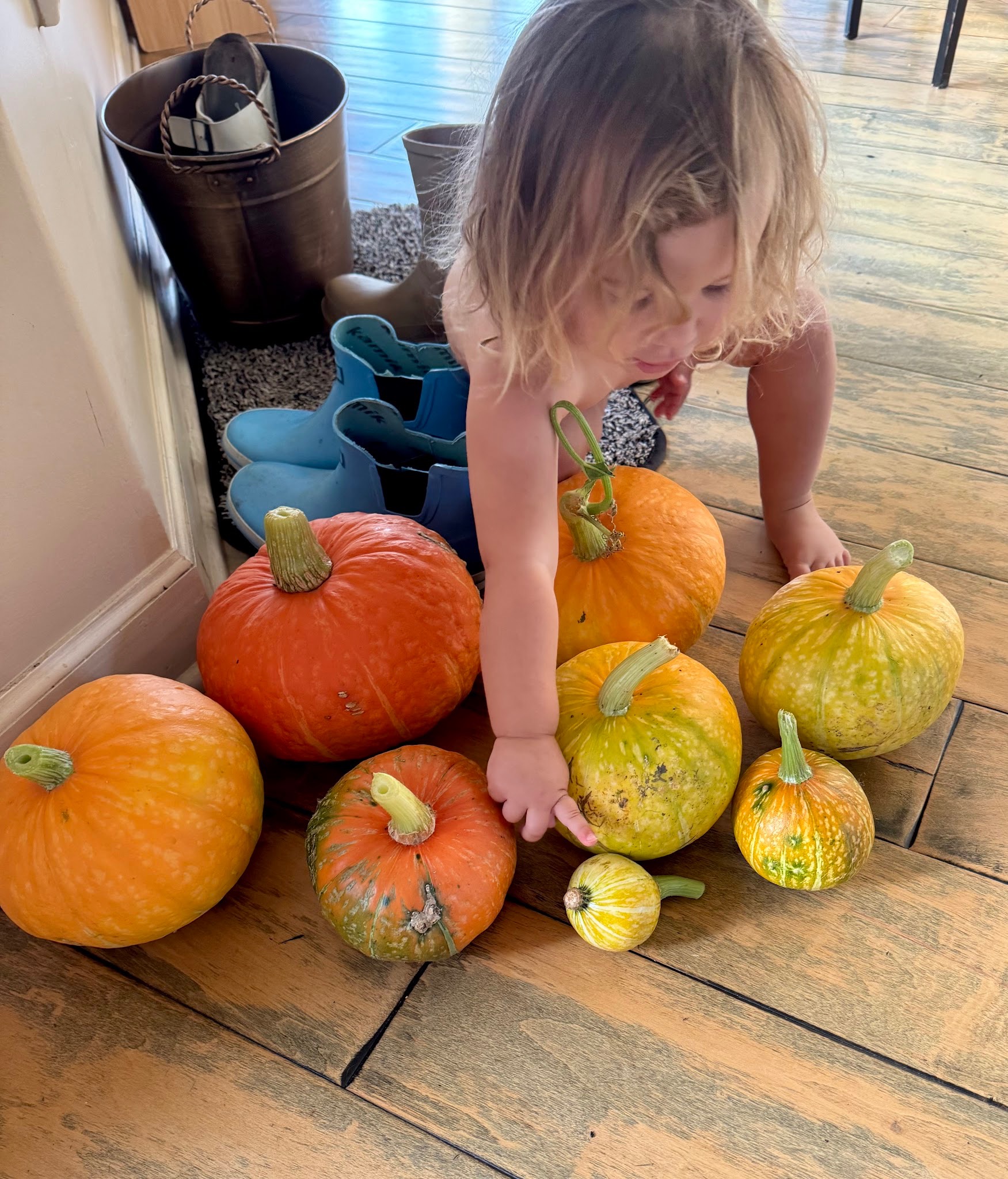
Later, during church service, she asked me to put her on my shoulders. “Asked” may be too generous. She issued a demand.
I told her no and put her down.
She immediately marched up the aisle, climbed onto the first step of the stage and sat facing the congregation.
“This is my seat,” she whispered.
I rolled my eyes and wondered about the next generation.
Then I remembered the corduroy pants and the erasable curse words of my own youth. Every generation worries that the one following it will finally finish the job of destroying civilization.
A few minutes later, I looked down and saw my granddaughter in the aisle again, exactly where she should not have been. Someone might trip over her.
She was sprawled on her belly with a Bible open in front of her, carefully turning the pages. Then she picked it up and held it toward me.
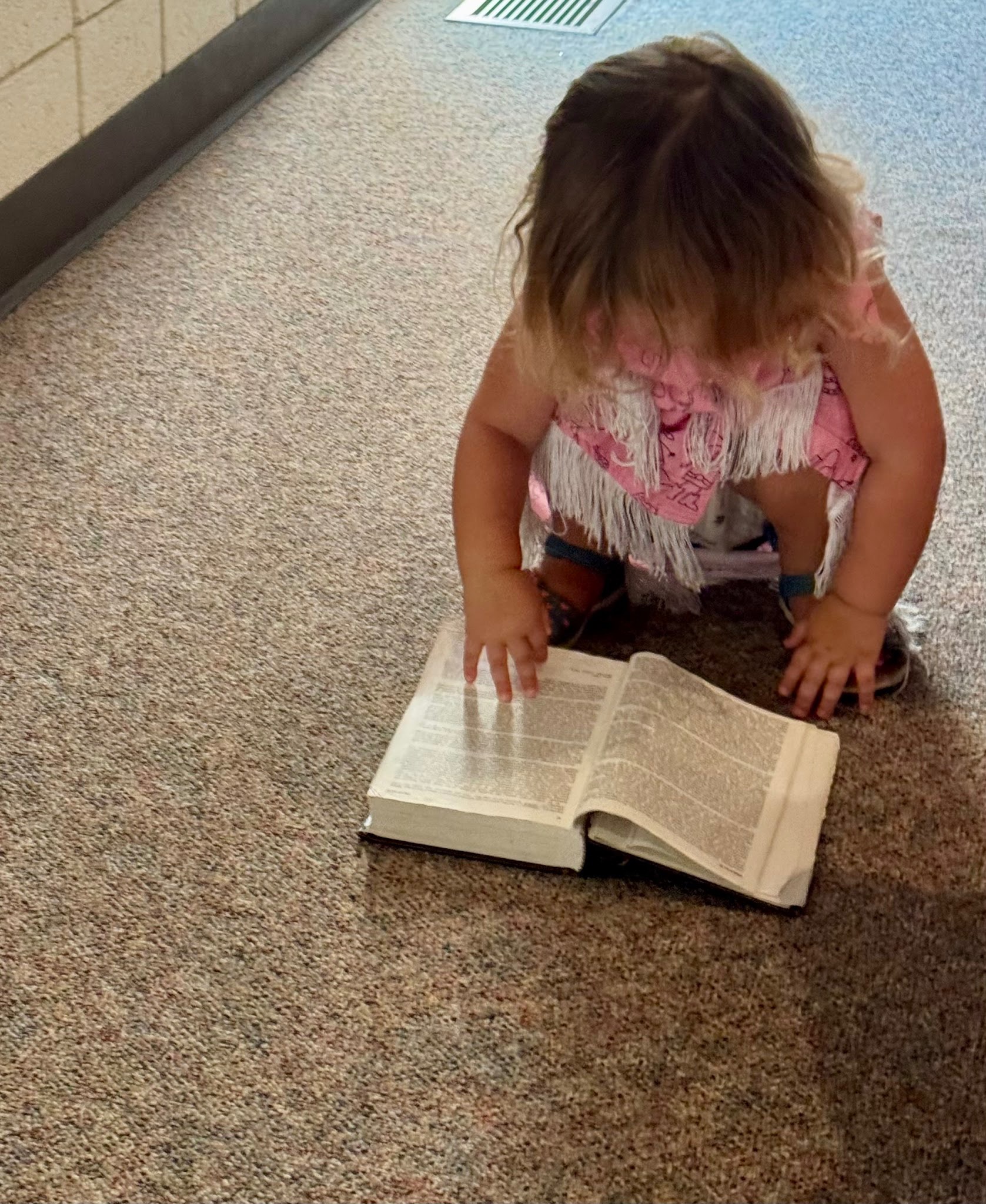
“Can you read this to me?”
In 1973, the writer E.B. White received a letter from a man who believed the world was collapsing around him. The man wanted to know how anyone could remain hopeful.
White acknowledged the darkness. Humanity’s curiosity and ingenuity, he suggested, had gotten us into terrible trouble. But perhaps those same qualities might help us find our way out. People still carried seeds of goodness that could sprout when the conditions were right.
He ended with advice that still feels useful:
“Hang on to your hat. Hang on to your hope. And wind the clock.”
The world may sometimes resemble a pair of corduroy pants. Words are written across it and then erased. Opinions reverse direction with the brush of a hand. What seemed permanent yesterday disappears today.
But not everything is erasable.
A child still asks someone to read to her.
A preacher still speaks about honesty.
A stadium filled with strangers still sings about going home.
Somewhere beneath the noise and fear, the seeds of goodness are waiting for the right conditions.
So wind the clock. Make the coffee. Open the book.
And hang on to your hope.


Leave a Reply