

A well-meaning friend once told me to dance like no one is watching. It didn’t take. I dance like people are watching. I was dancing at a wedding recently, (Apache, Jump on it) and it occurred to me that no one cares what I look like when I dance. I know this because if they did care, they would tell me as an act of compassion.
If Einstein is correct and dancers are the athletes of God, then I am a pretentious leaping gnome when the wedding DJ plays Shut up and Dance. My feet are on the dance floor, but they are a zip code away from the band, and vaguely connected to my hips.
When I was an undergrad at Harding University, Gene Cotton was a popular performer in our university lyceum series. Always thoughtful and lyrical, but underrated, Cotton sang Before My Heart Finds Out and Like a Sunday in Salem. I’ll never forget the title of his best album, Save the Dancer. And, the moment he chastised Harding students for the sin of not dancing. This was news to me, as I had always heard that it was a sin to dance. Worlds were colliding, cognitive dissonance in a partially developed eighteen-year-old soul that hovered above two left feet.
My feet are light and graceful only during moments of celebration. Opening a carton of Blue Bell Cookie Two Step ice cream is one of those moments, sashaying across the floor on the balls of my feet in route to the spoon drawer.
But absent a celebratory stimulant like ice cream or a wedding, I don’t dance — though I did marry a dancer.
A Garden State Surprise
My wife Karen grew up in Tabernacle, New Jersey, a small town on the edge of the Pine Barrens between Philadelphia and Atlantic City. When we were dating, I flew out to visit her. On the drive from the Philly airport with Karen and her sister Dawn, we crossed the Ben Franklin Bridge into Camden and rolled past a gauntlet of neon bars and dives along Route 70 — a far cry from the “garden” I had imagined.
We arrived at her parents’ home in a rusty green Chevy Nova that seemed permanently pointed toward the ditch thanks to a crooked alignment and a passenger door that wouldn’t open. Exiting through the driver’s side, I met my future mother-in-law.
I went in for a handshake. Maybe a hug.
Ann kissed me squarely on the lips.
As a Midwesterner raised on restraint, I nearly passed out. My pupils dilated. I blinked into a speechless stupor. Where were the cornfields and tomatoes? Was this New Jersey’s version of Eden — where inhibition is composted into affection?
Turns out, that kiss was just the Garden State handshake. I prayed the same rule didn’t apply to tollbooth guys from South Philly. “How you doin’?” was about as intimate as I wanted things as I handed over a five-dollar bill.
A Tale of Two Cultures
That moment was my first real clue: this was going to be a cross-cultural relationship.
Karen’s family was a party waiting to happen.
Mine? A potluck in a church basement.
Planted deeply in the soil of Midwestern virtue and grounded in the social gospel of Dust Bowl pragmatism, my mantra is a tight-lipped aversion to pleasure, skewed closer to sin-avoidance than sensory delight.
That isn’t to say joy doesn’t exist — only that it arrives quietly, like an apology.
Lest you think I’m ashamed of this, let me assure you:
I wear my social dysfunction with gentle pride.
Karen, meanwhile, learned life as a dance. Literally.
Every celebration in Tabernacle happened at the fire hall — her dad was the volunteer fire chief, and she grew up on a dance floor. Weddings, birthdays, anniversaries, Groundhog Day — all commemorated with Bee Gees and Bob Seger. She dances with grace because she was raised on rhythm.
Dancing with Mosquitoes
I have only one dancing memory from my youth: playing a genie in a 1978 song-and-dance revue at Harding University. Back then, the school wouldn’t say dance outright — we called it choreography, like a Footloose parody with better lighting.
Decades later, I returned to Harding for Spring Sing and watched students sing and sway with surprising rhythm. I had coffee with a few old classmates — David Fowler and David Hall. As we chatted about dancing, Hall leaned in and said:
“I’m one of those mosquito dancers.”
His term for a flailing, arrhythmic style full of sudden cattle-prod movements and confused facial expressions — like someone with biting mosquitoes in their socks and underwear.
In the noisy coffeehouse, Fowler and I misheard him:
“I’m a Speedo dancer.”
For a moment, we considered the trajectory of post-collegiate freedom. Hall, a pastor now, apparently danced in a Speedo. We had a good laugh once we realized the misunderstanding.
“Dancers work and they work and they work, and they master their skills so far that improvisation just comes flowing out of them… Their natural expression of the best they can possibly be comes out of them because there is no boundary to hold them back.”
— Pete Carroll
Rhythm and Grace
God bless all the mosquito dancers.
All we want is a little rhythm and grace — and a community like Karen had at the fire hall. A place where people danced not because they were good at it, but because the music was playing. Where the standard wasn’t perfection — just participation.
Some of us learn to waltz later in life — starting with tape on the floor and low expectations. And when we hear a song like “Sweet Caroline,” we don’t need to dance well. We just need to move a little, hug someone, and shout:
“So good! So good! So good!”
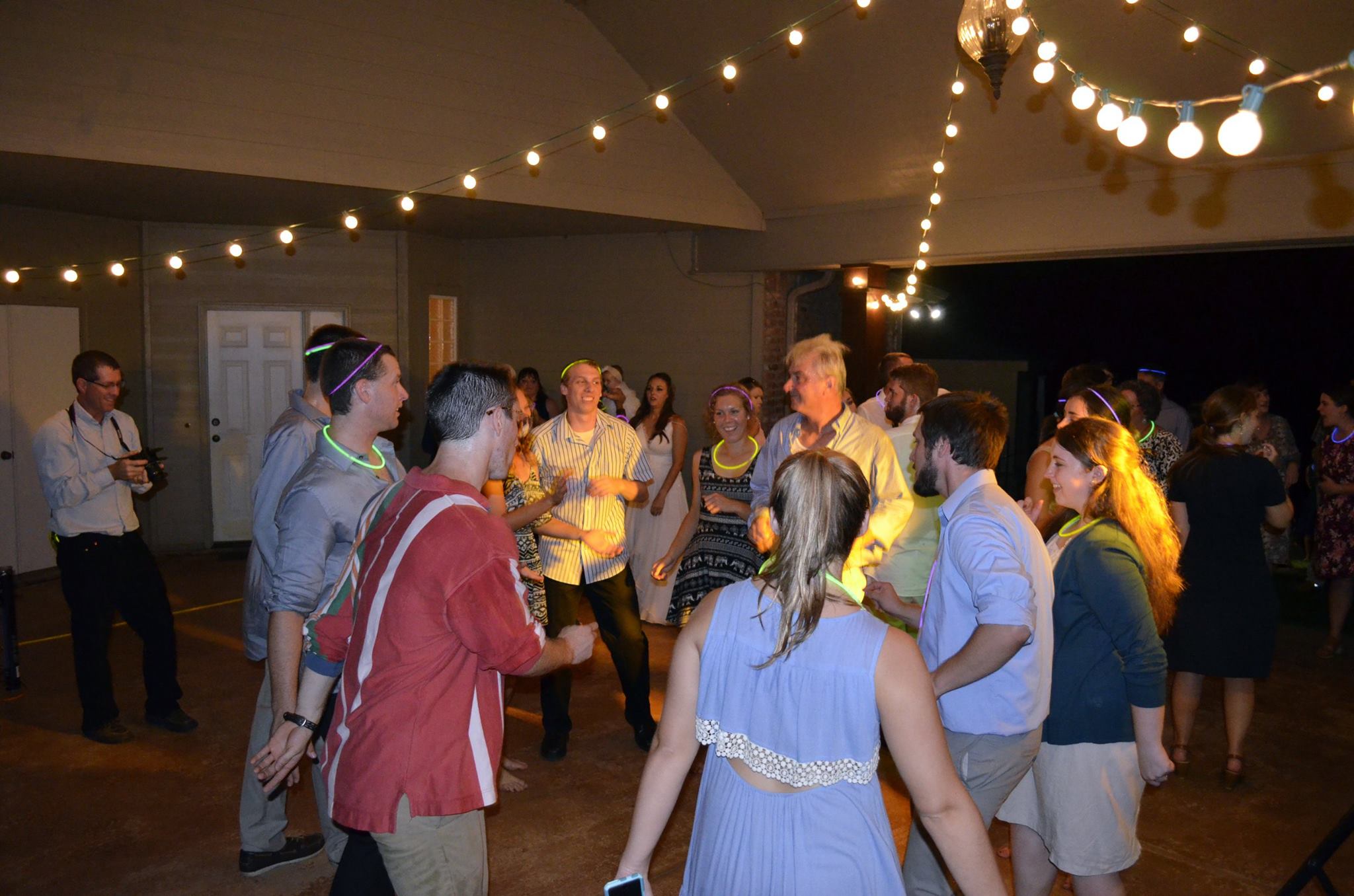
I feel my left foot jitterbugging.
My right foot’s trying to moonwalk.
I hope it’s not a mosquito.
 Bespoke
Funny and well written. The metaphors really drive this home, and I like the contrast you show between your SO’s background and yours. Cheers.
Thank you for the focused comments! Thanks for reading and commenting. I need to check out your blog!
Regards, Brent