
Karen and I were once DINKs… Double Income, No Kids.
We were young and relatively unencumbered. Karen taught high school math in Maple Shade, New Jersey. I practiced as a CPA — which meant I spent my days talking about depreciation schedules while wondering why no one invited me to interesting conversations.
The partners at our firm were Jewish. I liked them — energetic, sharp, fond of argument and laughter. One day the office felt strangely hollow. The partners were missing.
“Where is everybody?” I asked.
“It’s Yom Kippur,” someone said. “Holy day.”
“Oh,” I said.
I didn’t think much about holy days back then.
Anna did.
Anna worked at the front desk. She was young, smiling and steady, devoutly Catholic. One morning I breezed through the door and noticed something dark on her forehead.
“You’ve got a smudge,” I whispered.
She smiled. “It’s Ash Wednesday.”
I nodded, pretending I knew what that meant.
“It’s a reminder,” she said gently. “From dust we come, and to dust we return.”
I had read Genesis. I had just never connected the verse to a forehead.
I walked to my office slightly embarrassed — not by her faith, but by my own lack of understanding, about Ash Wednesday, and mortality.
Memento mori.
Remember that you will die.
The phrase was whispered, tradition says, to Roman generals during their victory parades. Conquer the world if you must — but don’t forget you are dust.
When you’re young, you don’t need someone whispering that in your ear. You find ways to forget it on your own.
Until you hear the word cancer in a doctor’s office. Then it isn’t abstract anymore.
Life and death stop being theological concepts and take up residence in the room with you.
An old preacher once told me, “Live every day like Jesus is coming back. Bags packed. And don’t have a bank account so big you’re afraid to leave it behind.”
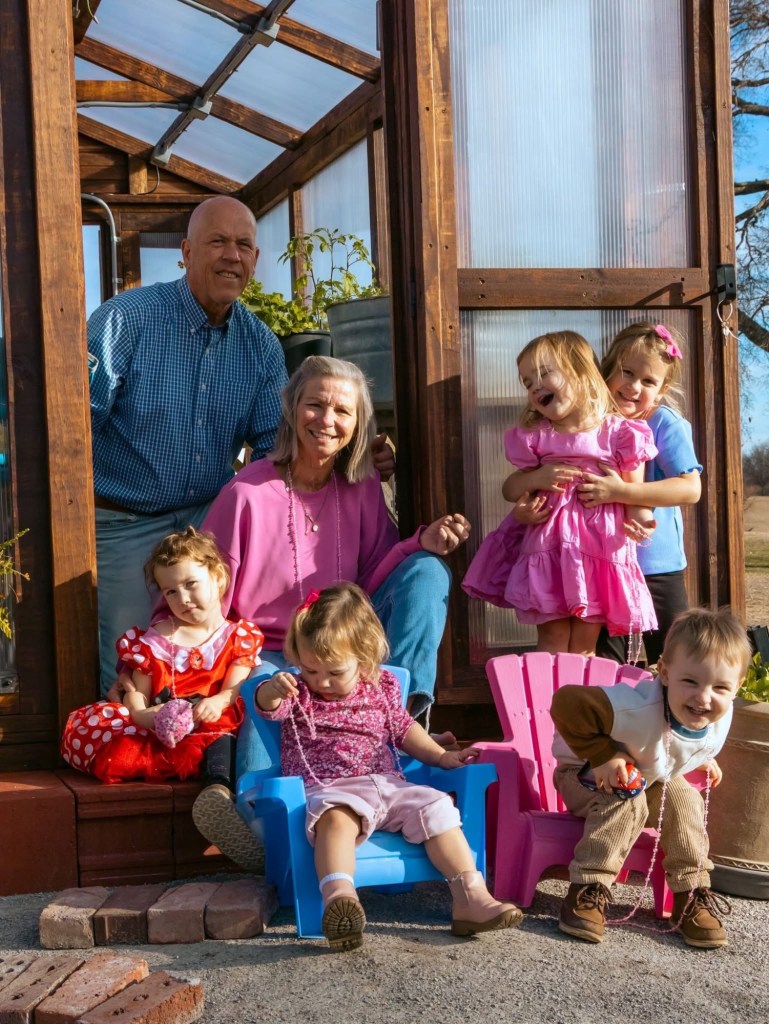
Karen and I are no longer DINKs.
We are something closer to SIKM. Single Income, Kids Many.
Which is what another old preacher used to tell me as I was on my way to lead the congregation in Sunday singing. “Sic’em,” he said energetically like a hunter sending a dog up a tree to fetch a coon. Strangely, that down home encouragement calmed my young nerves.
Today, our sic’em is about picking up toys. Our home looks like a daycare center. Toys migrate like herds of buffalo. Stuffed animals appear in the pantry. We walk gingerly at night fearful of stepping on a plastic stegosaurus.
But that’s not the real change in our lives. The real change is this: when mortality creeps near, you start spending your money differently.
Karen wanted a greenhouse. Years ago, we might have said, “Someday.”
Instead, we bought one.
Stained wood. Ribbed glass. Two doors. A heater for winter nights. A fan for summer heat.
The grandchildren call it Keke’s Greenhouse. They follow her inside as if entering a small cathedral — holding watering cans.
For one week while Karen was in Arizona, I became the cathedral keeper.
It turns out tending living things is more complicated than it looks.
Turn the heaters on before the freeze. Open the doors before the glass traps too much heat. Water deeply but not foolishly. Check the breakers.
The greenhouse keeps its own prayers.
Morning.
Noon.
Evening.
One morning I stepped inside before sunrise with a long-spouted watering can. A moth fluttered against the glass and brushed my ear. Lettuce appeared upright and expectant. Spinach lay low and earnest. A tomato vine displayed green fruit the size of a baseball.
And behind them all stands a singular cactus —
perfectly vertical,
self-righteously judging the fragile herbs and vines.
I bring nothing to the cactus.
No water. No conversation.
Just a brief salute to its proud austerity.
In the afternoons, Holland and Emmy run toward me in the driveway.
“Uppie, Bubs!”
They grab my legs like sunflowers seeking water.
They carry a turtle-shaped watering can toward the greenhouse. They spill half of it before we reach the door. What remains they pour out indiscriminately — on leaves, soil, their shoes.
The world feels right watching children water flowers.
At night I close the greenhouse like a careful innkeeper.
Check the temperature.
Check the heaters.
Turn out the light.
Miracles happen in that quiet space.
Seeds split open in darkness.
Roots reach downward.
Vines climb upward.
From what looks like burial, life insists.
Dust to dust indeed, like Anna’s smudge, like you and me.
Jesus did not promise that we would avoid death. He promised something better — that we would not face it alone.
In another garden long ago, He prayed three times for the cup to pass. But the story did not end there.
One day someone will close the doors on my fragile greenhouse and turn out the light.
From the outside, it may look like burial.
But I believe the Gardener returns.
And when He does, it will be to a place where nothing freezes, nothing withers, and even the cactus — proud and rigid — will soften.
Until then, we will tend what grows.
 Bespoke
Having just lost someone close, I loved this. Thanks for sharing!